Women's hair restoration
Women's hair restoration can mean different things, from non-surgical options to hair transplant surgery. FollicleLane is a **free matching service** that helps you connect with licensed providers so you can learn your options and choose what feels right for you.
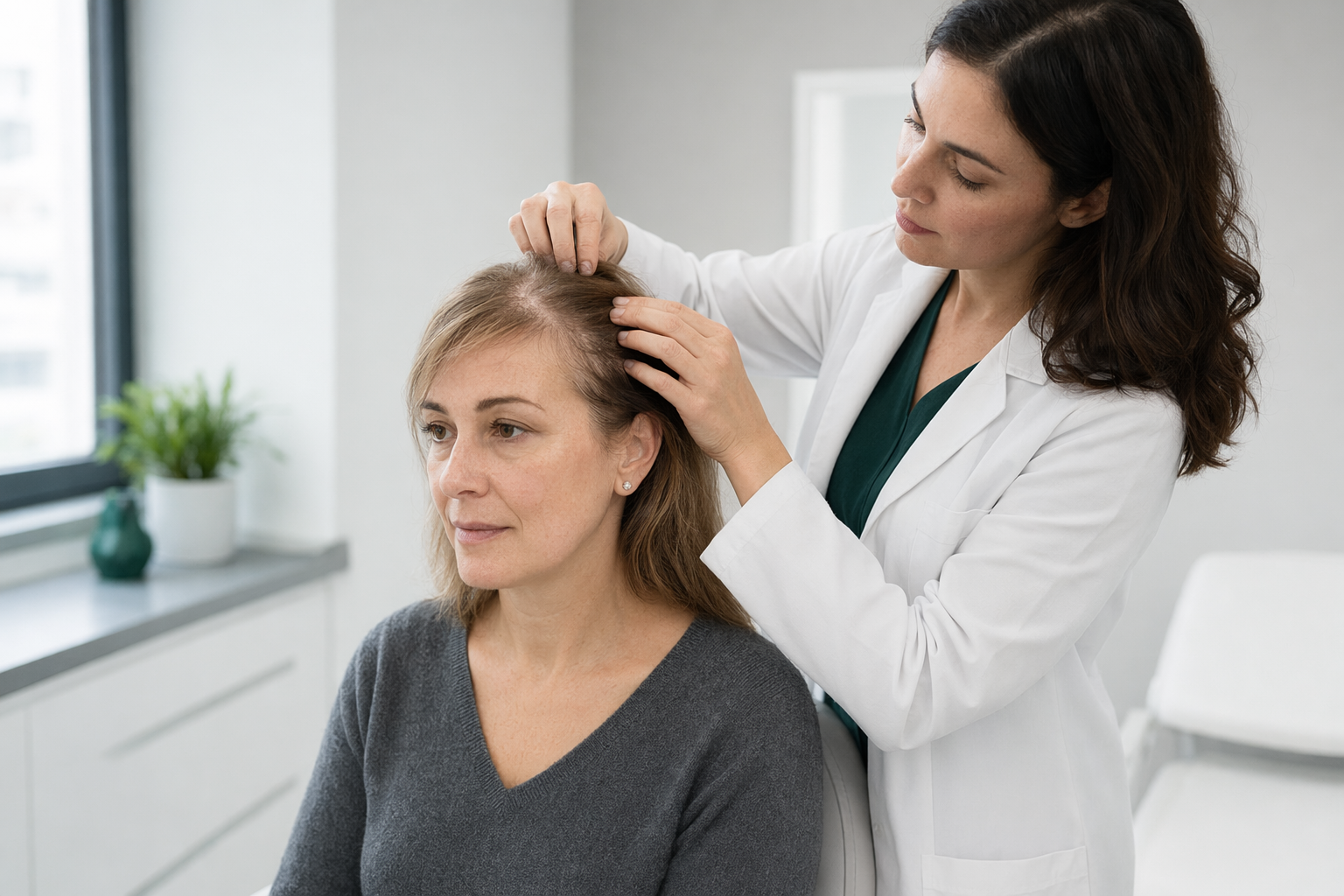
Hair loss can feel upsetting, especially if it changes how you see yourself. Many women deal with thinning hair, a wider part, patchy loss, or less volume over time. The good news is that there are different ways licensed providers may help, depending on your goals, hair pattern, and budget. FollicleLane is **not** a clinic or medical provider. We do not diagnose, treat, or perform procedures. We simply help you connect with licensed hair-restoration providers so you can ask questions, compare options, and decide your next step.
What women's hair restoration usually includes
Women's hair restoration is a broad term. It may include non-surgical care, procedures done by licensed providers, or a hair transplant for some people.
Common options you may hear about include:
- Hair transplant surgery, where hair is moved from one area to another
- In-office procedures that aim to support the look of fuller hair
- Scalp-focused care and cosmetic options recommended by licensed providers
- A treatment plan that may combine more than one approach over time
Not every option fits every person. Some women are looking for more density around the hairline or part. Others want help with diffuse thinning, which means hair looks thinner all over. A licensed provider can explain what may or may not be suitable for your pattern. This page is general education only, not medical advice.
How FollicleLane works
FollicleLane is a free matching service. We help you connect with licensed hair-restoration providers in your area or providers who offer remote consultation steps when appropriate.
Here is the basic process:
1. You share simple contact details and what kind of help you are looking for.
2. We match you with providers so you can learn about services, pricing, and appointment availability.
3. You speak with the provider directly and decide whether you want to move forward.
You can start here: get matched.
Important: we only help with contact and matching. We do not collect medical records, diagnose hair loss, recommend treatment, or tell you which procedure you should have. Always speak with a licensed provider and verify credentials yourself before booking.

Who may look into this service
This service may be useful for women who:
- Notice thinning hair, a widening part, or reduced volume
- Want to learn about transplant and non-surgical options
- Feel confused about pricing, timelines, or where to start
- Want to compare more than one licensed provider before deciding
It may be especially helpful if English is not your first language and you want a simple starting point. You do not need to know the exact name of a procedure before reaching out.
A provider can explain whether your goals and hair pattern may be a fit for certain services. In some cases, a provider may tell you that a transplant is not the best option, or that you should address the cause of shedding first. That is one reason it helps to get evaluated by a licensed professional.
Typical price ranges to know
Costs vary a lot based on the type of service, the number of grafts or sessions, the provider's experience, and where you live.
General estimates may include:
- Consultation fees: sometimes free, sometimes a separate charge
- Non-surgical sessions: often a few hundred dollars per visit, sometimes more
- Hair transplant procedures: often several thousand dollars, and sometimes much more depending on scope
These are only broad estimates, not quotes. Travel, lab fees, aftercare products, and time away from work can add to the total cost. If you want a fuller breakdown, visit our guide to costs.
When you speak with a provider, ask for a written estimate and what is included. A low upfront price may not include everything.
Timeline, appointments, and downtime
The timeline depends on the option you choose.
For non-surgical care:
- You may need a series of visits
- Changes, if any, can take time
- Maintenance may be needed
For hair transplant surgery:
- There is usually a consultation first
- The procedure itself may take several hours
- You may need a short recovery period before returning to normal activities
- Visible growth often takes months, not days or weeks
Hair grows slowly, so patience matters. Some early shedding after certain procedures can happen before new growth appears. A licensed provider can explain the expected timeline for your plan and what recovery may look like for you.
Because every person is different, individual results vary. No ethical provider should promise an exact outcome.
Set honest expectations from the start
It is normal to hope for a big change, but honest expectations are important.
A few things to keep in mind:
- Hair restoration is often about improvement, not perfection
- Density may look better, but may not match how your hair looked years ago
- Some people need more than one session or a long-term plan
- Results depend on your hair pattern, donor hair, age, styling habits, and other personal factors
- Individual results vary
Be careful with before-and-after photos online. Lighting, hair styling, makeup, and camera angles can change how results look. Ask providers to explain what results may be realistic for someone with a similar hair pattern to yours.
FollicleLane does not guarantee results, and no provider should guarantee a specific cosmetic outcome.
Questions worth asking at your consultation
Bring a short list of questions so you feel clear and calm. You can ask:
- What options do you offer for women with my type of hair loss?
- Am I being seen by a licensed provider, and what are their credentials?
- How many sessions or grafts might be discussed, and why?
- What is the full estimated cost, and what is included?
- What is the downtime?
- When might I notice changes, if any?
- What are the limits or downsides of this option?
- Who will perform each part of the procedure?
- What follow-up care is included?
You do not need to share private medical records with a matching service. Save personal health discussions for the licensed provider you choose to speak with.
How to choose a provider with confidence
Take your time. A good provider should make you feel informed, not pressured.
Look for:
- Clear licensing and professional credentials
- Experience with women's hair restoration
- Honest discussion of limits, risks, cost, and recovery
- Clear answers about who does the procedure
- Written pricing and follow-up details
It is smart to compare more than one option. Read reviews carefully, but do not rely on reviews alone. Ask to verify credentials yourself and make sure you understand exactly what is being offered.
For more help, read our guide on how to choose a hair restoration provider.
FollicleLane is here to make the search easier, but the final choice is always yours.
In plain language
You do not have to figure this out alone. FollicleLane helps you connect with licensed providers so you can ask simple questions, compare options, and choose carefully.
Common questions
How much does women's hair restoration cost?
It depends on your pattern, the number of grafts or sessions, and your area — see the cost section for typical ranges. These are estimates, not quotes, and individual results vary.
Is FollicleLane a clinic or doctor?
No. FollicleLane is a free matching service. We do not diagnose hair loss, give medical advice, or perform procedures. We help connect you with licensed providers, and you should verify credentials yourself.
Are results guaranteed?
No. Honest providers should not guarantee a specific cosmetic result. Hair restoration outcomes vary from person to person based on many factors, and individual results vary.
How long does it take to see results?
It depends on the option you choose. Non-surgical care may take multiple visits, and hair transplant results often take months to become visible. A licensed provider can explain the timeline for your situation.
Do I need to know what treatment I want before getting matched?
No. You can start by sharing basic contact intent and your general goal, like thinning at the part or wanting to learn about options. The licensed provider can explain what services they offer and whether they may be suitable for you.
Want to talk to a hair-restoration provider?
Get matched, free, with a licensed provider near you — in your language. We share your contact details and general goal only, never medical records. You compare and choose who to see, with no obligation.
Get matched, free Book a call