FUE hair transplant
FUE hair transplant is a common way to move healthy hair follicles from one area of the scalp to another. This page explains the basics in plain English so you can understand the process, typical costs, and what questions to ask a licensed provider.
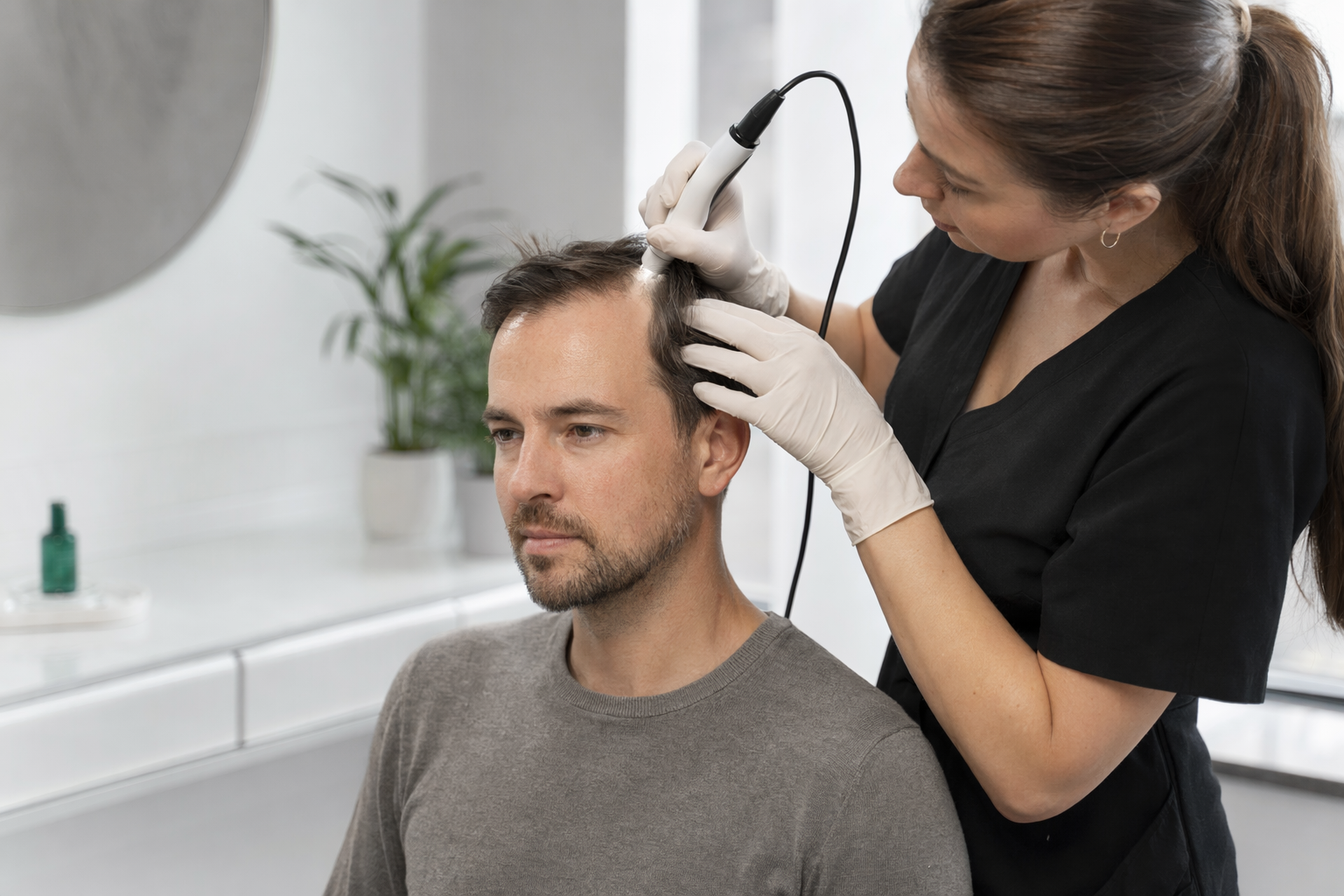
Many people look into FUE after noticing thinning hair, a receding hairline, or bald spots. **FUE** stands for **follicular unit extraction**, which means a provider removes small hair follicle groups one by one from a donor area, usually the back or sides of the head, and places them where more coverage is wanted. FollicleLane is a **free matching service** that helps connect you with licensed hair-restoration providers. We are **not** a clinic or medical provider, and this is **general educational information, not medical advice**. Always speak with a licensed provider and verify their credentials yourself.
What FUE is and why people choose it
FUE is a hair-restoration procedure that uses your own hair. The goal is usually to improve the look of thinning areas by moving follicles from places with stronger growth to places with less hair.
People often choose FUE because:
- it does not usually involve a long linear scar on the scalp
- it can be used for hairlines, crown areas, or patchy thinning in some cases
- recovery may feel easier for some people than older methods
That said, FUE is not right for everyone. The donor area must have enough healthy hair to move, and some hair-loss patterns are harder to improve than others. A licensed provider can explain whether FUE may be a fit for your goals.
How the FUE process usually works
The basic idea is simple: take follicles from one area and place them in another area.
A typical process may look like this:
1. Consultation: You meet with a licensed provider to discuss your goals, hair pattern, and options.
2. Planning: The provider maps out the donor area and the area to receive grafts.
3. Extraction: Small follicle units, often called grafts, are removed one by one.
4. Placement: The grafts are placed into tiny openings in the thinning or bald area.
5. Aftercare: You get instructions on washing, activity, and follow-up.
A graft is a small group of hairs, not always just one hair. The number of grafts needed can change the price, the length of the session, and the final look.
If you are early in your research, our matching service can help you connect with licensed providers for next-step conversations. FollicleLane does not perform procedures, give treatment advice, or decide what is right for you.

Who may consider FUE
FUE is often considered by adults who:
- have a receding hairline or thinning crown
- want to fill in certain areas rather than shave the whole scalp for a larger strip procedure
- have enough donor hair on the back or sides of the head
- understand that results take time and can vary from person to person
It may also be discussed for some scar areas, beard restoration, or eyebrow restoration, but those cases can be more specialized.
Not everyone is a good match. Some people may have hair loss that is still changing, very limited donor hair, or goals that are not realistic for one session. A licensed provider should review your situation and explain the options in plain language. FollicleLane does not review medical history or give medical opinions.
Typical cost range in the US
FUE can be expensive, and prices vary a lot by city, provider experience, technique, and the number of grafts or sessions.
A general US estimate is often around $4,000 to $15,000+. Smaller sessions may cost less, while larger sessions can cost more. Some providers price by graft, and others price by session.
Cost can depend on:
- how many grafts you need
- the size of the area being treated
- the provider's training and experience
- where the office is located
- whether more than one session may be needed
Be careful with very low prices. A lower price is not always a better value if experience, safety steps, or follow-up are weak. You can learn more on our hair restoration cost guide. These numbers are estimates, not quotes, and individual results vary.
What the timeline and recovery can look like
Recovery is different for each person, but there is usually a short early healing period and a much longer waiting period for visible growth.
Many people can expect:
- First few days: tenderness, redness, small scabs, and swelling in some cases
- First 1-2 weeks: scabs usually shed, and the scalp starts to look calmer
- First 1-3 months: some transplanted hairs may shed before new growth starts
- Around 3-6 months: early new growth may begin to show
- Around 9-12 months or longer: fuller results are often easier to judge
This waiting period can feel frustrating. Hair does not usually appear right away. Also, a transplant does not stop future hair loss in other areas. That is one reason honest planning matters.
Always follow the aftercare instructions from your licensed provider. If you have questions about healing, contact that provider directly.
Set honest expectations before you decide
The main goal of FUE is usually improvement, not perfect density like you may have had as a teenager. Results depend on your hair type, donor supply, scalp characteristics, the plan used, and how your hair loss changes over time.
Important things to know:
- Individual results vary.
- One session may not create the level of fullness you want.
- Some people may need more than one session over time.
- The hairline must look natural for your face and age, not just low or very dense.
- Photos online may show best-case examples, not average outcomes.
A trustworthy provider should explain what is realistic, what may not be possible, and what the trade-offs are. Be cautious if someone promises a certain look or makes the process sound easy for everyone.
Smart questions to ask at a consultation
It helps to bring a short list of questions. You do not need to use medical words. Plain questions are fine.
Consider asking:
- Are you licensed, and what is your training in hair restoration?
- Who does each part of the procedure?
- How many grafts do you think may be needed, and why?
- What results do you think are realistic for me?
- What will recovery likely be like?
- What risks and limits should I understand?
- How is the price structured?
- What follow-up is included?
- Can I see a range of before-and-after photos with similar hair loss patterns?
You can also ask for the provider's license details and look them up yourself. FollicleLane encourages every reader to verify credentials and make sure they feel comfortable before moving forward.
How to choose a provider carefully
Choosing a provider may matter as much as choosing the procedure. Take your time.
Look for:
- clear communication in simple language
- a licensed provider who explains options without pressure
- realistic discussion of limits, cost, and timeline
- transparent pricing and who performs each step
- before-and-after photos that look consistent and natural
- reviews that mention professionalism, honesty, and follow-up
Watch out for:
- pressure to book fast or pay the same day
- promises of guaranteed or perfect results
- unclear answers about credentials
- prices that seem far below the normal range without explanation
Our guide on how to choose a hair restoration provider can help you compare options. If you want, FollicleLane can help you connect with licensed providers for consultations, but we do not perform procedures or give treatment advice.
In plain language
FUE moves your own hair from one part of the scalp to another. It can help some people, but it takes time, costs can be high, and results are personal and never guaranteed.
Common questions
How much does fue hair transplant cost?
It depends on your pattern, the number of grafts or sessions, and your area — see the cost section for typical ranges. These are estimates, not quotes, and individual results vary.
Is FUE hair transplant permanent?
Transplanted hairs may last a long time for some people, but no result should be described as guaranteed or a permanent cure. Hair loss can continue in other areas, and individual results vary. A licensed provider can explain what may be realistic in your case.
How long does it take to see FUE results?
Many people do not see meaningful growth right away. Early shedding can happen first, and visible improvement often takes several months. Fuller results are often judged around 9 to 12 months or longer, but timing varies.
Does FUE leave scars?
FUE usually involves many very small extraction sites rather than one long linear scar. Even so, any procedure can leave marks, and the visibility can vary by hair length, skin tone, healing, and technique. Ask a licensed provider what to realistically expect.
How do I choose a FUE provider?
Look for a licensed provider who explains the process clearly, discusses limits honestly, and gives transparent information about pricing, who performs each step, and follow-up care. Always verify credentials yourself before deciding.
Want to talk to a hair-restoration provider?
Get matched, free, with a licensed provider near you — in your language. We share your contact details and general goal only, never medical records. You compare and choose who to see, with no obligation.
Get matched, free Book a call