How Many Grafts Do I Need?
How many grafts you need for hair restoration depends on how much hair loss you have and how much coverage you want. A licensed provider can estimate this after a careful, in-person review—so you can get a clearer plan without guessing.
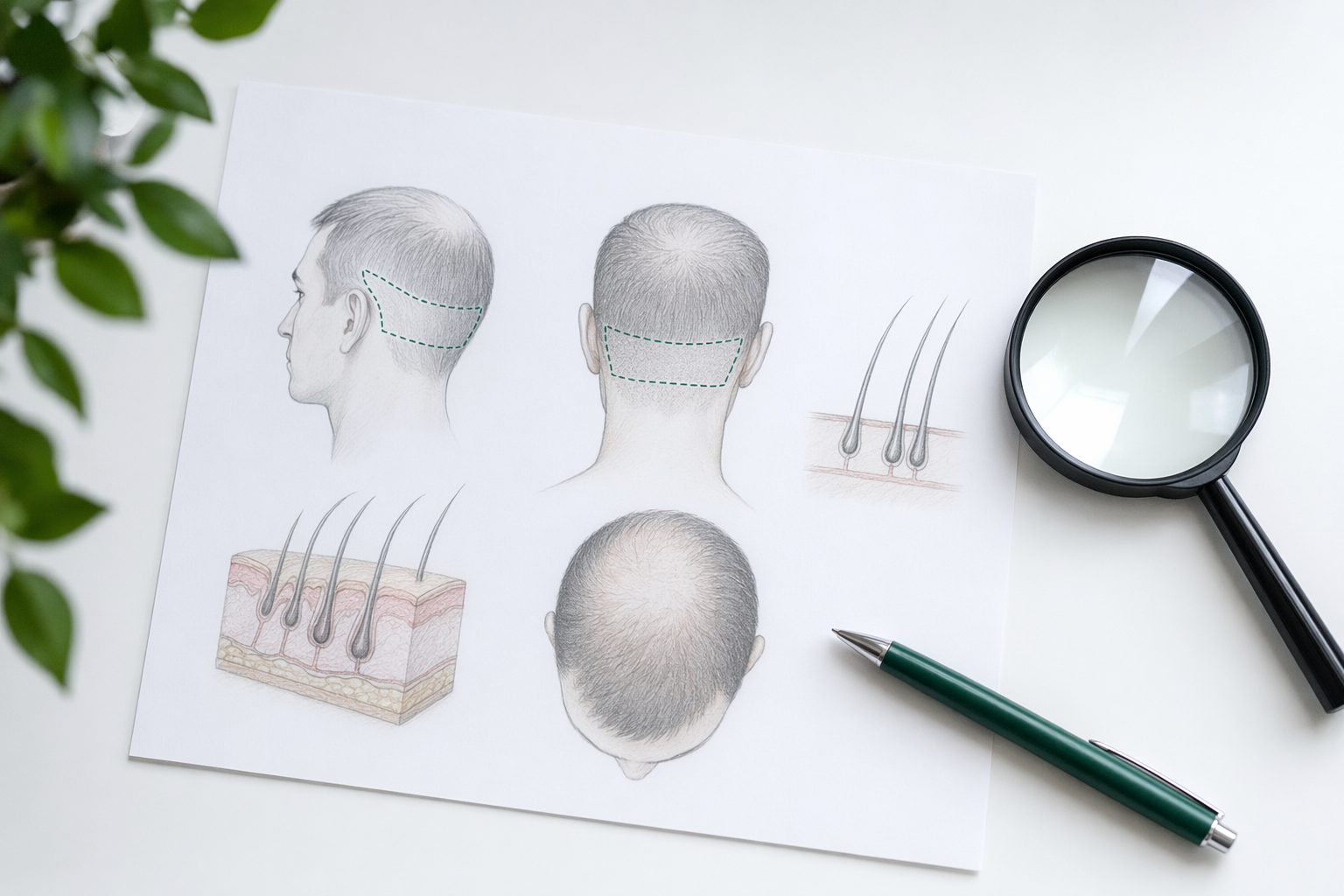
It’s normal to wonder, “What number is right for me?” Hair restoration graft counts aren’t one-size-fits-all. Two people with the same pattern of thinning can need different amounts because of the size of the area, the hair characteristics, and your goals. FollicleLane is a free matching service that helps you connect with licensed providers who can estimate graft needs for your situation.
The short answer: it depends on your coverage goals
There isn’t a single graft number that fits everyone. Most people are estimating grafts based on:
- How wide and dense your thinning area is
- Where the hair loss is (for example, front hairline vs. mid-scalp)
- Your desired look (light coverage vs. more natural, fuller density)
- Your hair’s quality and how it may regrow after treatment (results vary)
If you’re starting from scratch, it helps to think in terms of “area” first, then “how dense you want it.” That approach usually makes graft estimates easier to understand when you talk with a provider.
To get started with real options, you can use get-matched to find licensed providers in your area.
What affects the graft estimate (and why providers may use different numbers)
A graft estimate is usually calculated from what the provider sees during an evaluation. Common factors include:
1. Area size and shape
Providers look at how much scalp is visible and map the zone to be treated.
2. Existing hair and how it blends
If you have some surrounding hair, the plan may aim to blend new growth more naturally.
3. Your goals for density
Some people want a subtle improvement; others want stronger coverage. The same area can require different graft counts depending on your target density.
4. Hair characteristics
Thickness, curl/texture, and the way your hair typically grows can affect how much grafts are needed to reach your look.
Because every assessment is individual, you might hear different numbers from different licensed providers. That doesn’t always mean someone is wrong—it can mean they’re using different goals or evaluating differently. If you want to compare options, ask how they calculated their estimate and what “success” means for you.
Cost can also be related to graft count, so if you’re budgeting, review costs to understand the range of what people commonly pay and what may affect pricing.
Finally, always verify who you’re talking to. Use how to choose a hair restoration provider to check credentials and feel more confident asking questions.

What to do next: get your estimate, then compare plans
To move forward safely and clearly:
- Book a consultation with a licensed provider and ask for their graft estimate and the reasoning behind it.
- Ask about options if you want partial vs. fuller coverage.
- Confirm credentials (licenses and training) yourself before deciding.
- Compare more than one provider if the numbers don’t match what you expected.
Remember: results are honest and individual results vary. No one can promise a specific graft outcome, and no one should pressure you into a decision. Your best next step is to get a clear, written plan from a licensed provider you trust.
In plain language
A graft number depends on your thinning area and the amount of coverage you want. The only way to know a good estimate is to talk with a licensed provider—then compare plans and verify credentials yourself.
Common questions
How many grafts do I need on average?
There is no true “average” that fits everyone. Providers estimate grafts based on the size of your thinning area and your coverage goals. Ask for an explanation of how the estimate was calculated.
Can I choose a graft number myself?
It’s better to choose your goals (light improvement vs. fuller coverage) and let a licensed provider estimate the grafts needed to match that goal. Providers may also suggest staged plans depending on your situation.
Will more grafts always give better results?
More grafts can help with density, but it’s not the only factor. Individual results vary based on hair characteristics, planning, and healing—so your provider should guide you using your evaluation.
Can FollicleLane treat my hair loss?
No — FollicleLane is a free matching service, not a clinic or doctor. We connect you with licensed hair-restoration providers. You compare and choose who to see, and individual results vary.
How do I know if a provider is credible?
Verify their license and credentials yourself, and ask what experience they have with your hair-loss pattern. You can also use [guides/how-to-choose-a-hair-restoration-provider](/guides/how-to-choose-a-hair-restoration-provider/) to help you compare.
Want to talk to a hair-restoration provider?
Get matched, free, with a licensed provider near you — in your language. We share your contact details and general goal only, never medical records. You compare and choose who to see, with no obligation.
Get matched, free Book a call