FUE vs FUT — which transplant is right?
FUE and FUT are two common hair transplant methods, but the best fit depends on your goals, hair pattern, budget, and what a licensed provider says after an exam. This guide explains the basics in plain English so you can ask better questions and make a calmer choice.
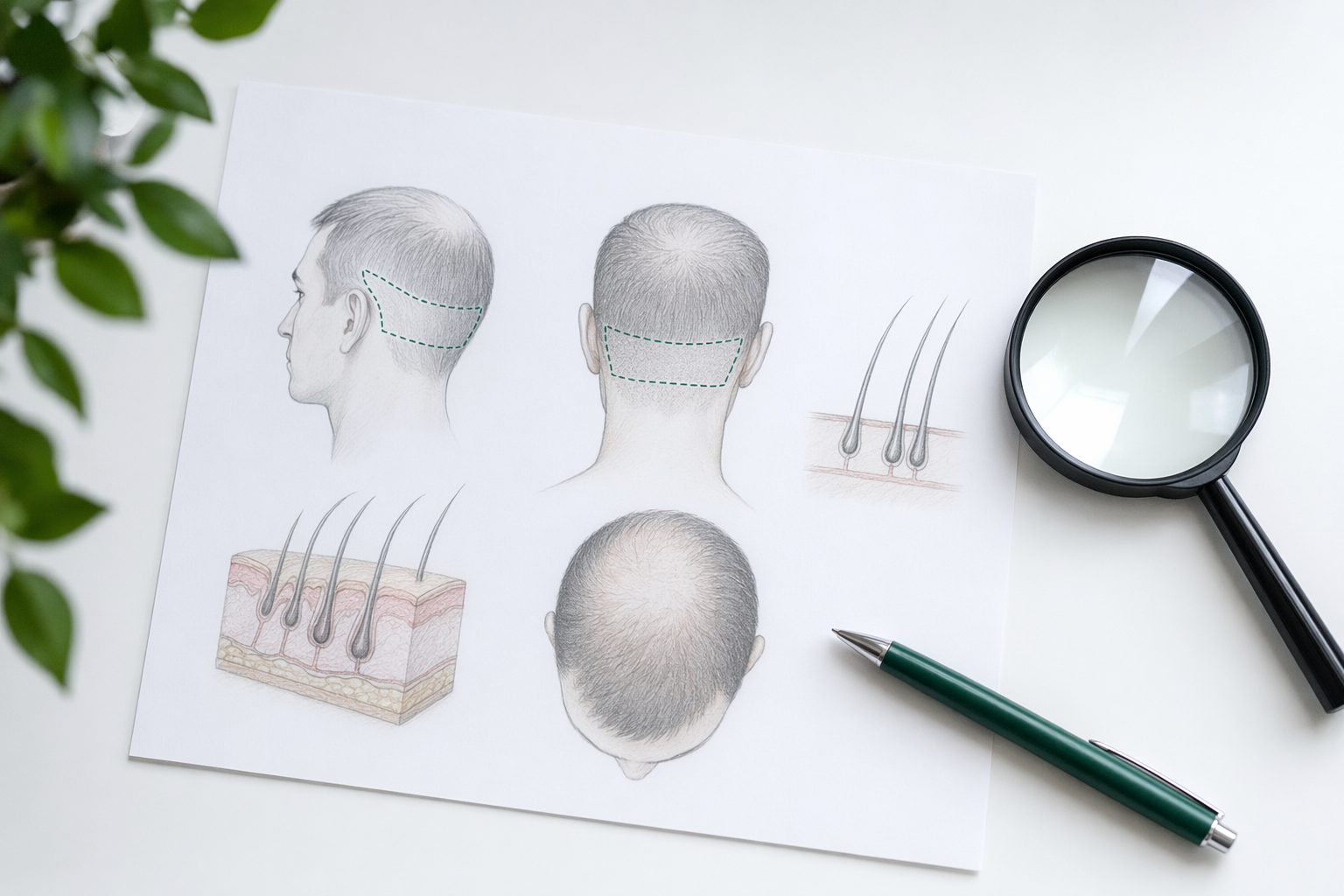
If you are comparing FUE and FUT, you are not alone. Many people feel nervous, confused, or overwhelmed at first. The good news is that both methods aim to move healthy hair follicles from one area to another, but they do it in different ways. FollicleLane is a **free matching service** that helps connect people with licensed hair-restoration providers. We are **not** a clinic or medical provider, and this is **general educational information, not medical advice**. Only a licensed provider can examine you, explain your options, and help you understand what may be realistic for your situation. **Individual results vary.**
How FUE and FUT are different
FUE means follicular unit extraction. In simple terms, a provider removes hair follicles one by one from the donor area, usually the back or sides of the scalp, and places them where hair is thinner. If you want a basic overview, see FUE hair transplant basics.
FUT means follicular unit transplantation. In simple terms, a provider removes a thin strip of scalp from the donor area, then separates that strip into small grafts and places them in the thinning area.
Here are the main differences people often compare:
- Scar pattern: FUE usually leaves many very small dot-like marks. FUT usually leaves one longer, line-like scar.
- Hair length after surgery: Some people prefer FUE if they want to wear their hair very short later, but scar visibility can still vary by person.
- Number of grafts in one session: In some cases, FUT may allow a large number of grafts in one procedure, but this depends on the person and the provider.
- Healing and comfort: Recovery feels different for different people. One method is not "easy" for everyone.
- Cost: Prices can differ based on the method, graft number, provider, and location. You can read more about hair transplant costs.
Neither option is automatically "better." The right choice depends on your scalp, hair type, hair-loss pattern, goals, and the judgment of a licensed provider.
Key points that matter most for your decision
When people ask, "Which one is right for me?" these are usually the biggest factors:
1. Your hairstyle now and later
If you like a very short haircut, you may care a lot about how scars could look. Ask a licensed provider to explain scar patterns honestly and show you what may be typical, while remembering that individual results vary.
2. Your donor hair
The donor area is the hair used for the transplant. A provider should look at how strong and dense that hair is. This matters because donor hair is limited.
3. Your hair-loss pattern
If your hair loss may continue over time, planning matters. A transplant should be discussed as part of a longer-term plan, not just a quick fix.
4. Your budget and time
FUE and FUT can have different price ranges and different time needs for the procedure and recovery. A lower price is not always a better value if the planning or execution is poor.
5. The provider's training and experience
This may matter as much as the method itself. Always verify credentials yourself, ask who does each part of the procedure, and make sure the provider is licensed.
6. Realistic expectations
Transplanted hair can improve coverage, but it usually does not give the exact same density you had before hair loss. Honest planning is a good sign. Be careful if someone promises too much.

What to do before you choose
Take a slow, practical approach:
- Learn the basics first. Know the simple difference between FUE and FUT so you can ask clear questions.
- Speak with a licensed provider. Ask what method they recommend for your case and why.
- Ask about scarring, downtime, and likely limits. It is okay to ask direct questions in plain language.
- Ask to see before-and-after examples carefully. Lighting, hair length, and styling can change how results look.
- Confirm who will perform the work. Ask what the licensed provider does personally and what staff may do.
- Review the total price. Ask what is included and what is not.
If you want help finding licensed options to contact, FollicleLane can help you get matched with providers. We only help with contact connection. We do not diagnose, recommend a treatment plan, or collect medical records.
A simple question list can help:
- Why do you think FUE or FUT fits me better?
- What kind of scar should I expect?
- How many grafts might be discussed, and why?
- What does recovery usually involve?
- What are the possible downsides and limits?
- Who will do each step of the procedure?
- How should I verify your license and credentials?
Common mistakes people make
A lot of stress can come from small misunderstandings. Watch out for these common mistakes:
- Choosing based only on price. The cheapest option can become more costly if the planning is poor.
- Believing big promises. No one should guarantee a certain look or say a transplant is a perfect answer for everyone.
- Ignoring future hair loss. A good plan should consider what may happen later, not just today.
- Not checking credentials. Always verify licenses and experience yourself.
- Thinking FUE means no scar at all. FUE usually has tiny scars, even if they are less noticeable for some people.
- Thinking FUT is outdated or always worse. For some people, FUT may still be a reasonable option. It depends on the case.
- Rushing because of fear or embarrassment. Hair loss can feel personal, but it is still okay to take your time and compare options.
You do not need to know every medical detail. You just need enough clear information to ask smart questions and avoid pressure.
Your next step: compare options calmly
If you are deciding between FUE and FUT, try not to think of it as a test with one perfect answer. Think of it as a conversation with a licensed provider about goals, trade-offs, and what may be realistic for you.
FollicleLane is a free matching service that connects people with licensed hair-restoration providers. We are not a doctor, surgeon, clinic, or medical provider, and we do not give medical or surgical advice. Our role is simply to help you find providers to contact. From there, you should ask questions, compare answers, and verify credentials yourself.
A good next step is simple: learn the basics, make a short question list, and talk with a licensed provider. Stay careful with promises, and remember that individual results vary.
In plain language
FUE and FUT both move hair, but they leave different scar patterns and may fit different goals. The safest next step is to talk with a licensed provider, ask clear questions, and verify credentials yourself.
Common questions
Is this medical advice?
No — this is general, educational information, not medical advice. Always confirm details with a qualified, licensed hair-restoration provider, and remember individual results vary.
Is FUE always better than FUT?
No. FUE is not automatically better for everyone. Some people prefer it for scar pattern or hairstyle reasons, while others may be told FUT is a reasonable option. A licensed provider should explain the trade-offs for your situation.
Will a hair transplant look natural?
It can look natural in some cases, but no result should be promised. A natural-looking outcome depends on planning, donor hair, hair characteristics, and provider skill. Individual results vary.
Does FollicleLane do consultations or procedures?
No. FollicleLane is a free matching service. We help connect people with licensed hair-restoration providers, but we are not a clinic or medical provider and we do not perform procedures or give treatment advice.
What should I check before choosing a provider?
Verify that the provider is licensed, ask who performs each part of the procedure, ask about costs and recovery, and make sure the explanation feels clear and realistic. It is wise to compare more than one option before deciding.
Want to talk to a hair-restoration provider?
Get matched, free, with a licensed provider near you — in your language. We share your contact details and general goal only, never medical records. You compare and choose who to see, with no obligation.
Get matched, free Book a call