Hairline Design Basics
A good hairline design should look natural for your face, age, and hair type. The goal is usually not the lowest possible line — it is a balanced look that still makes sense years from now.
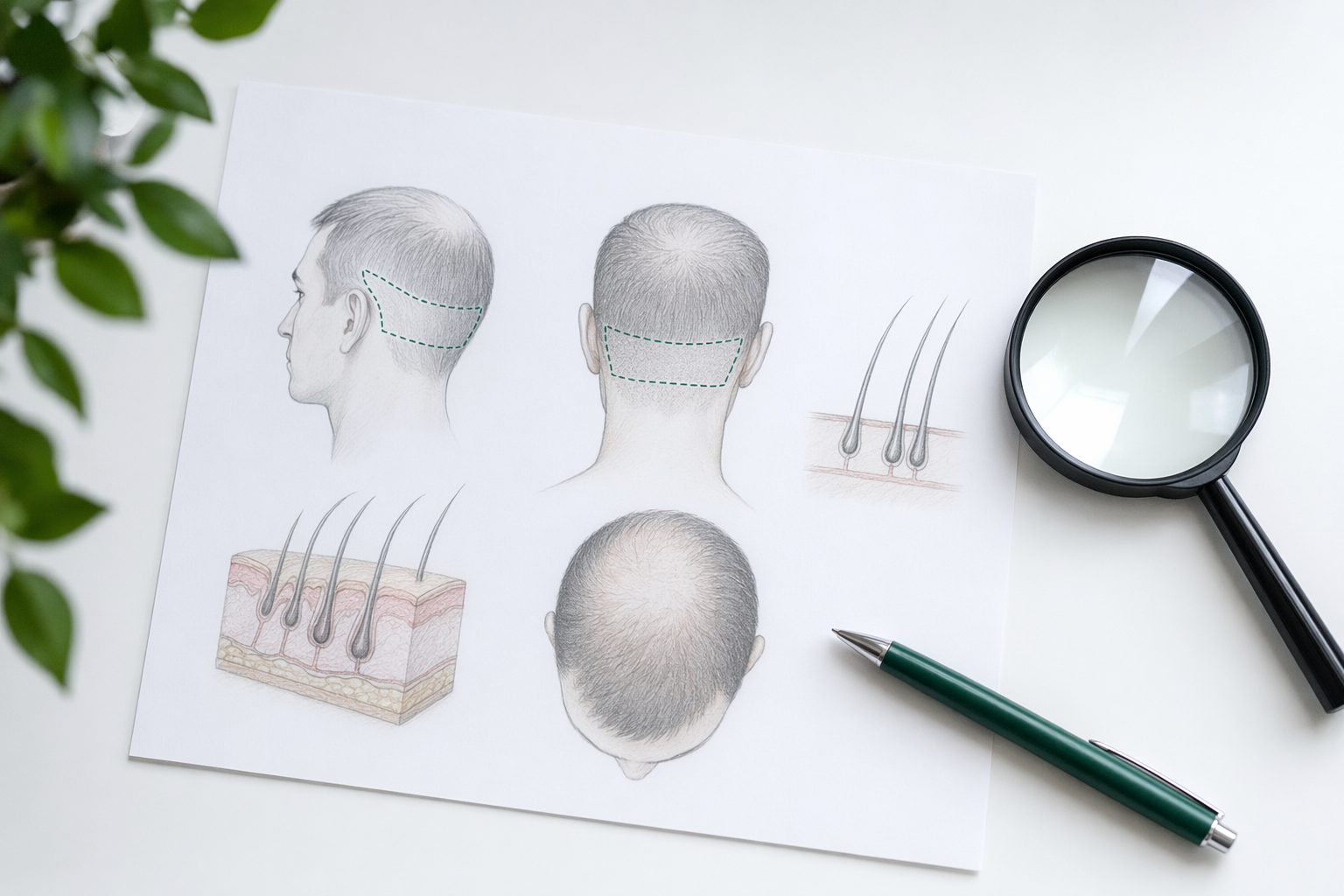
If you are thinking about hair restoration, the hairline is often the first thing you notice. It frames your face, so small changes can make a big difference. Many people ask for a "perfect" hairline, but in real life, the best hairline is usually one that looks believable, not obvious. This page is general education only, not medical advice. FollicleLane is a **free matching service** that helps you connect with licensed hair-restoration providers. We do not diagnose hair loss, perform procedures, or give treatment advice.
The short answer: natural beats low
A well-designed hairline is usually soft, age-appropriate, and slightly uneven in a natural way. It should fit your face shape, hair type, and likely future hair loss pattern.
A few basic truths can help:
- Lower is not always better. A very low line can look unnatural later.
- Straight lines often look fake. Natural hairlines usually have small irregularities.
- Density matters. How full the front looks depends on donor hair, hair thickness, color contrast, and styling.
- Planning matters. A provider should think about how your hair may change over time.
If you want help taking the next step, you can start with get matched to compare licensed providers. You should still verify each provider's credentials yourself before choosing who to see.
What makes a hairline look natural
Hairline design is part art, part planning. A licensed provider may look at several things when discussing options:
1. Your face shape
A hairline that suits one person may look wrong on another. The width of the forehead, the shape of the temples, and the overall balance of the face all matter.
2. Your age
A teenage hairline and an adult hairline are not the same. Many adults look best with a mature hairline that sits a little higher than it did in youth.
3. Your hair characteristics
Curly, wavy, straight, fine, and coarse hair can create different visual effects. Thick or curly hair may give more coverage. Fine hair may need a more careful design to avoid looking thin.
4. Temple area
The corners at the front of the hairline are important. If the temples are designed too sharply or too low, the result can look unnatural.
5. Future planning
This is a big one. Hair loss may continue. A hairline that looks good today should also make sense if surrounding hair changes later. That is why many licensed providers take a conservative approach.
Natural does not mean boring. It means the line fits you and does not draw the wrong kind of attention.

Common mistakes people make when choosing a hairline
It is normal to focus on old photos and want your youngest hairline back. But that can lead to choices you may regret. Common mistakes include:
- Asking for the lowest possible hairline without thinking about long-term balance.
- Ignoring donor limits. Donor hair is the hair available to move from one area to another. It is limited, so using too much in the front may leave fewer options later.
- Copying someone else's hairline. Your features and hair type are different.
- Judging only by one photo. Lighting, wet hair, angles, and styling can change how results look.
- Looking only at price. Cost matters, but so do experience, planning, and clear communication. You can learn more about typical costs, but lower price alone does not tell you if a provider is a good fit.
It also helps to remember that individual results vary. No one should promise a perfect result, and no ethical source should guarantee how your hairline will look.
Questions to ask a licensed provider
You do not need to know medical terms to have a good conversation. Plain questions are enough. For example:
- What hairline shape do you think would look natural on me, and why?
- How do you plan for possible future hair loss?
- Can you show examples of hairlines on people with a similar hair type or face shape?
- What are the limits of my donor hair?
- How many grafts might be discussed, and what difference could that make?
- What should I expect in terms of timeline, maintenance, and uncertainty?
A trustworthy provider should explain things in simple language, not pressure you, and not promise a certain outcome. It is smart to compare options and read our guide on how to choose a hair-restoration provider. Then verify licenses, training, and experience yourself.
What to do next if you are still unsure
If you are early in your research, keep it simple:
- Save a few realistic photos of hairlines you like. Focus on natural-looking examples, not extreme makeovers.
- Think long term. Ask yourself how you want your hair to look in 5 to 10 years, not just next month.
- Compare licensed providers. Communication style, honesty, and planning matter.
- Watch for red flags. Be careful with pressure, vague answers, or promises that sound too good to be true.
- Use a matching service if helpful. FollicleLane can help you get matched with licensed hair-restoration providers at no cost. We are not a clinic or doctor, and we do not give treatment advice.
The goal is not to rush. The goal is to make a thoughtful decision with a licensed provider you have checked for yourself.
In plain language
The best hairline usually looks natural, not super low or perfectly straight. Take your time, compare licensed providers, and make sure the plan makes sense for your face and for the future.
Common questions
Can FollicleLane treat my hair loss?
No — FollicleLane is a free matching service, not a clinic or doctor. We connect you with licensed hair-restoration providers. You compare and choose who to see, and individual results vary.
Is the lowest hairline always the best choice?
Usually no. A very low hairline can look unnatural and may not fit future hair loss changes. Many people do better with a hairline that looks balanced and age-appropriate.
Can a provider promise exactly how my hairline will look?
No honest source should guarantee a specific result. Hair characteristics, donor limits, healing, styling, and many other factors can affect the final look. Individual results vary.
What should I bring to a consultation?
You can bring a few realistic photos of hairlines you like and a short list of questions. You do not need special knowledge. Ask for clear explanations in plain language and verify the provider's credentials yourself.
Does FollicleLane choose the provider for me?
No. We help connect you with licensed hair-restoration providers for free, but the choice is always yours. You should compare options and confirm qualifications, experience, and fit on your own.
Want to talk to a hair-restoration provider?
Get matched, free, with a licensed provider near you — in your language. We share your contact details and general goal only, never medical records. You compare and choose who to see, with no obligation.
Get matched, free Book a call