Your Donor Area Explained
Your donor area is the part of your scalp where hair may be taken for a hair transplant. It matters because the amount, thickness, and strength of that hair can affect what a licensed provider may be able to do.
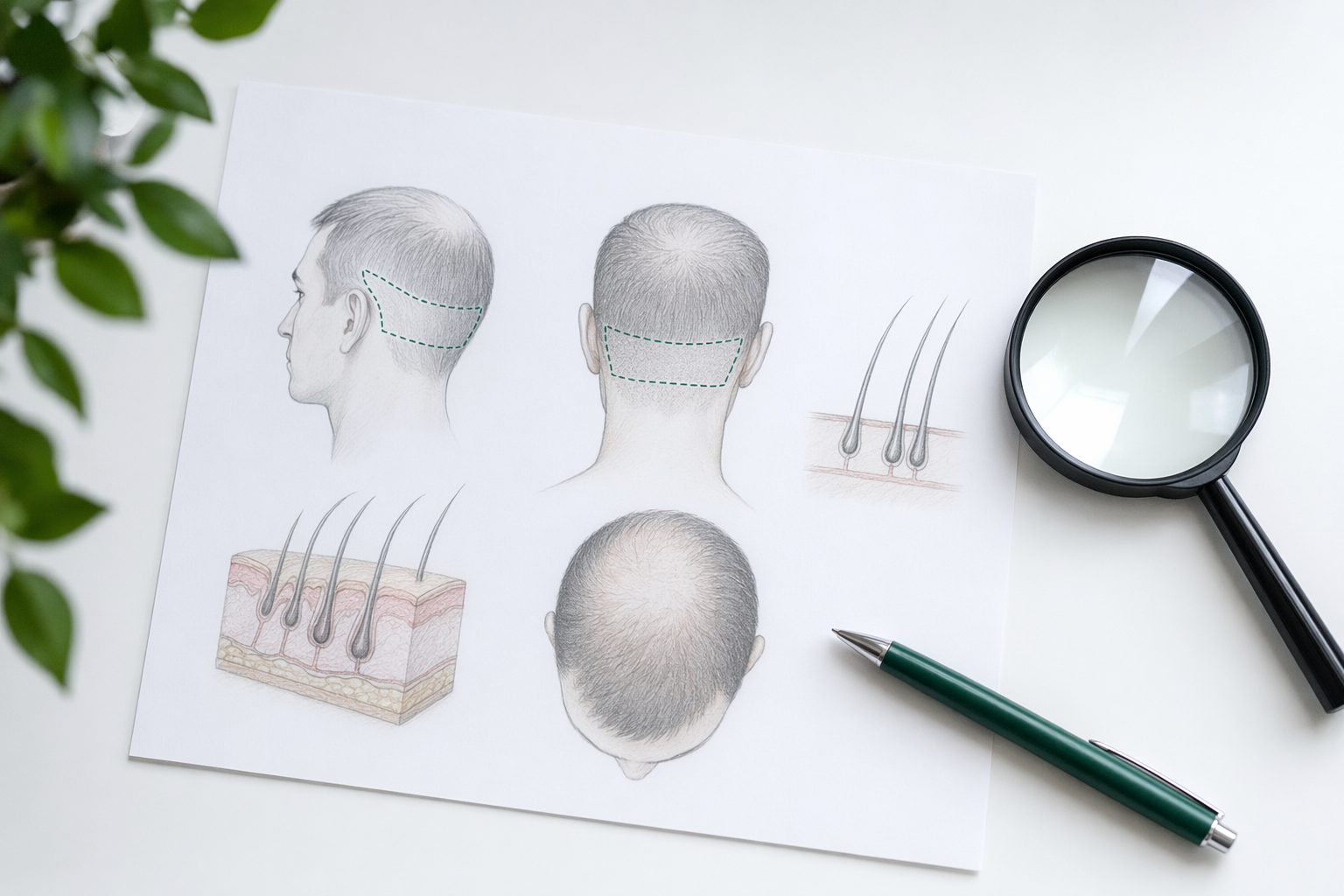
If you are looking into hair restoration, you may hear people talk about the **donor area**. This usually means the back and sides of the scalp, where hair often stays thicker for longer. It sounds technical, but the basic idea is simple: if hair is moved during a transplant, it usually comes from this area. FollicleLane is a **free matching service** that connects you with licensed hair-restoration providers. We do not give medical advice, perform procedures, or tell you what treatment is right for you.
What the donor area means in simple words
The donor area is the place a licensed provider may look at when deciding whether hair can be moved from one part of the scalp to another. In many people, the hair on the back and sides is more likely to keep growing even when the top or front gets thinner.
The main reason this area matters is supply. A person only has so much donor hair. That means hair restoration planning is often about using a limited amount of hair in the smartest way possible.
A provider may look at things like:
- How much hair is there in the donor area
- How thick each hair is
- How tightly or loosely the hairs grow together
- How the donor area looks overall, including whether it appears even or sparse
This is general education, not medical advice. A licensed provider should examine you directly and explain what they see in your case.
The short answer: yes, your donor area is a big deal
Yes — your donor area is very important. For many people thinking about a hair transplant, it can be one of the biggest factors in what may or may not be possible.
A stronger donor area may give a licensed provider more options. A weaker or smaller donor area may mean fewer options, a more limited plan, or a different approach. It does not automatically mean "yes" or "no" for a procedure. It means the provider needs to look carefully and be honest with you.
This is also why two people with similar hair loss on top of the head may hear different opinions from providers. The visible thinning is only part of the picture. The donor area matters too, and individual results vary.

What providers often look for
When a licensed provider talks about the donor area, they are often trying to answer a few basic questions:
1. Is there enough donor hair?
If the donor area has limited hair, that can affect how much coverage may be possible.
2. Is the hair a good match for the area that needs coverage?
Hair texture, thickness, and color contrast can all matter in how full the result may look.
3. Can hair be taken in a way that still looks natural in the donor area?
Taking too much from one place can leave the donor area looking thin.
4. What are realistic goals?
A careful provider should explain what may be reasonable, what may be limited, and what trade-offs may exist.
That last point is important. Honest planning matters more than promises. No one should guarantee a result, and you should be careful with anyone who sounds too certain before examining you.
Why donor area limits matter
People sometimes focus only on the front hairline because that is what they see in the mirror. But hair restoration is often about balancing today’s goals with tomorrow’s needs.
Because donor hair is limited, choices made now can affect future options. For example, if someone has ongoing hair loss, they may want to understand how a plan fits the long term, not just the next few months. A licensed provider can explain how they think about this.
It also helps to know that "more grafts" does not always mean "better." Grafts are small groupings of hairs used in a transplant. What matters is whether the plan makes sense for your hair, your goals, and your available donor supply.
If you are early in your research, our costs guide can help you understand what people often compare when looking at hair restoration options.
Questions you can ask at a consultation
You do not need perfect English or expert knowledge to ask good questions. Simple questions are enough. You can ask:
- How does my donor area look to you?
- Do you think I have strong, average, or limited donor supply? Why?
- What kind of result seems realistic for me?
- What are the limits or trade-offs?
- How do you try to protect the donor area from looking overused?
- What credentials do you have, and what is your role in the process?
It is always smart to compare more than one provider. You can also review our guide to choosing a hair-restoration provider before you book visits. And always verify a provider’s license, experience, and credentials yourself.
What to do next if you are worried
If you are concerned about hair loss, the next step is not to guess from photos online. The best next step is to speak with a licensed provider who can evaluate you in person or through their normal consultation process and explain your options clearly.
You do not need to share private medical records with FollicleLane. We are not a clinic or doctor. We simply help you get matched with licensed hair-restoration providers so you can compare and decide who to contact.
As you move forward:
- Look for clear, calm explanations instead of big promises
- Ask what is realistic for your donor area
- Compare providers, pricing, and credentials
- Take your time before making a decision
Hair loss can feel stressful, but you do not have to figure it out alone. The right provider should explain things in plain language, answer your questions, and be honest that individual results vary.
In plain language
Your donor area is the hair supply a provider may use for a transplant, usually from the back and sides of your scalp. It is a big part of what may be possible, so speak with a licensed provider, compare carefully, and verify credentials yourself.
Common questions
Can FollicleLane treat my hair loss?
No — FollicleLane is a free matching service, not a clinic or doctor. We connect you with licensed hair-restoration providers. You compare and choose who to see, and individual results vary.
Does a strong donor area mean I am definitely a good candidate?
No. A donor area can be an important factor, but it is only one part of the picture. A licensed provider needs to assess your situation and explain what may be realistic. No one should guarantee a result.
If my donor area seems thin, does that mean I have no options?
Not necessarily. It may mean there are limits, or that a provider may discuss different approaches and expectations. Only a licensed provider can evaluate you properly and explain your options.
Should I trust online photos to judge my donor area?
Online photos can be misleading because lighting, angles, hair length, and styling can change how things look. It is better to speak with a licensed provider and ask for a clear explanation based on your own case.
What should I check before choosing a provider?
Check that the provider is properly licensed, ask about their experience and role in the process, and compare more than one option. FollicleLane can help you connect, but you should always verify credentials yourself.
Want to talk to a hair-restoration provider?
Get matched, free, with a licensed provider near you — in your language. We share your contact details and general goal only, never medical records. You compare and choose who to see, with no obligation.
Get matched, free Book a call